
TL;DR
Key Takeaway: A micro-expedition motorcycle trip is a deliberately short, high-intensity ride — typically 1 to 3 days — built around a specific objective, route, or experience rather than raw mileage. Done right, it delivers more satisfaction per hour than most two-week tours.
Best by Scenario:
- Weekend rider with family commitments: 36-hour micro-expedition with a single destination anchor
- Rider returning after a long break: 1-day objective-based route to rebuild confidence without overcommitting
- Adventure tourer between big trips: Monthly micro-expeditions to maintain sharpness and discover local terrain
Counterintuitive Insight: The riders getting the most out of motorcycling right now are not the ones doing the longest trips. They are the ones doing the most intentional ones.
You Have the Bike, the Gear, and Zero Time to Actually Ride
You know the feeling. The long trip you’ve been planning for three years keeps getting pushed back. Work, family, money, timing — something always wins. Meanwhile, the bike sits in the garage accumulating dust and guilt in roughly equal measure.
You tell yourself you’ll ride when you have a real stretch of time. A week minimum. Two weeks ideally. Anything less feels like it doesn’t count.
That mindset is costing you hundreds of riding days you’ll never get back.
I’ve been riding for over a decade and covering motorcycle travel professionally for most of it. I’ve done the two-week epic tours across multiple states. I’ve also gone through long stretches where life made those trips impossible. What I found — through trial, frustration, and eventually a deliberate shift in approach — is that the format most riders are waiting for is not the one that actually makes them better riders or happier people. The micro-expedition motorcycle concept flipped how I think about riding time entirely.
My Evaluation Framework
I want to be upfront about how I’ve assessed micro-expeditions, because this concept gets thrown around loosely online and deserves a tighter definition before we can evaluate it honestly.
What I looked at:
- My own experience running micro-expeditions over the past four years, ranging from 18-hour overnights to structured 3-day objective rides
- Conversations with riders across skill levels — commuters who barely tour, and seasoned adventure tourers who have done months-long trips
- The psychological research on what actually creates lasting satisfaction from travel (hint: it’s not duration)
- Practical logistics: what makes a short trip feel complete versus truncated
What I excluded:
A micro-expedition is not just a short ride. A 200-mile Sunday loop you do every week is not a micro-expedition — it’s a day ride. The distinction matters. A micro-expedition has intentionality: a defined objective, a sense of departure from normal routine, and at least one element that requires planning or commitment.
I also excluded the trend-chasing version of this concept — people calling a 30-minute coffee run a “micro-adventure” because the word sounds appealing. That’s not what this is.
The mistake most riders make: They evaluate a trip’s quality by its length. This is the same error that leads people to judge a restaurant by the size of the portion. Duration and depth are not the same thing.
What a Micro-Expedition Motorcycle Trip Actually Is
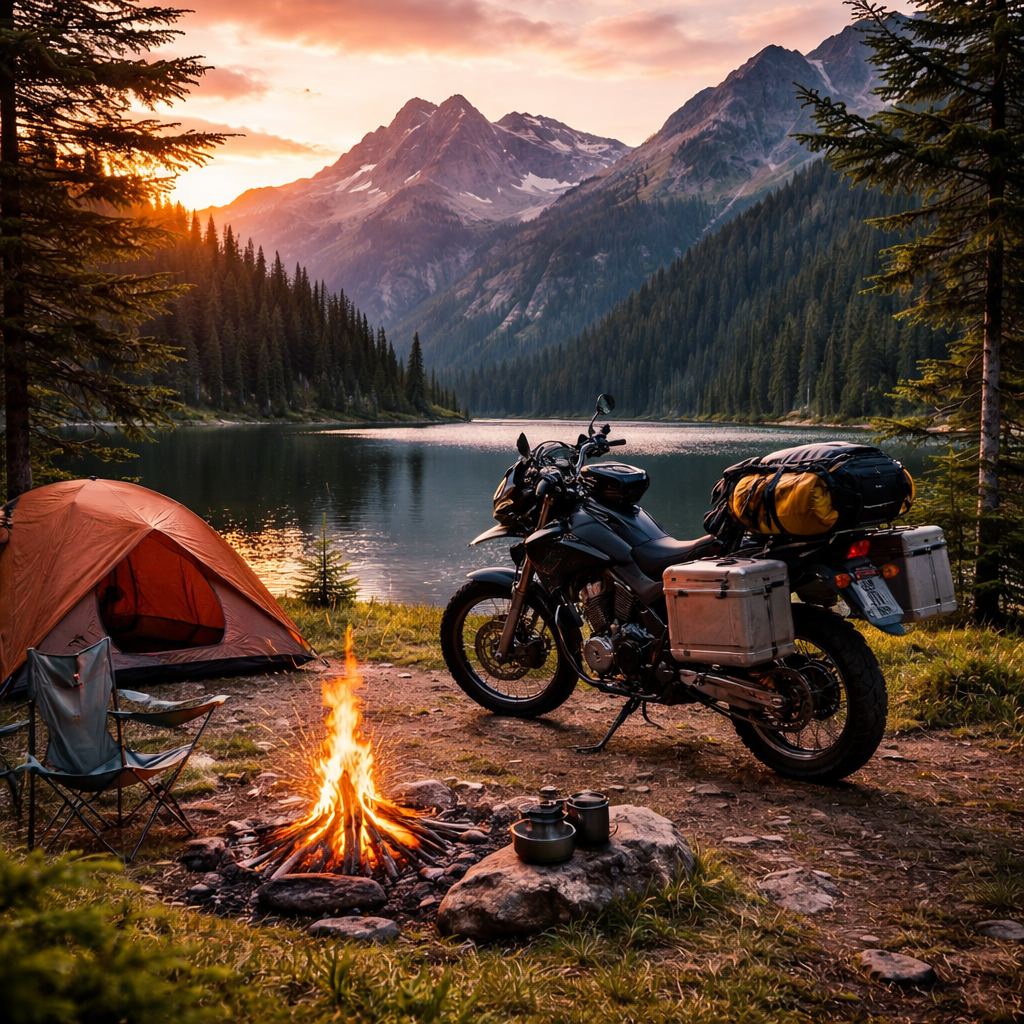
A micro-expedition is a short, objective-driven journey that creates a genuine sense of expedition — discovery, challenge, self-sufficiency — within a compressed timeframe. For motorcyclists, it typically means 1 to 3 days, a defined goal or destination, and a deliberate effort to be fully present rather than just covering ground.
The term was popularized in outdoor adventure circles by people like Alastair Humphreys, who completed expeditions on his doorstep to prove that adventure doesn’t require crossing continents. The motorcycle community has been slow to adopt the language but has been practicing the concept informally for years.
The core elements of a true micro-expedition:
- A specific objective — a mountain pass, a canyon road at dawn, a coastal route, a town you’ve never visited
- Intentional departure from routine — you pack a bag, you sleep somewhere other than home, you commit to the trip
- A defined start and end — not an open-ended wander, but a shaped experience with a narrative arc
- Self-sufficiency — you carry what you need, you problem-solve on the road, you don’t treat it like a commute
What separates a micro-expedition from a day ride is the same thing that separates a camping trip from a backyard barbecue. The logistics, the commitment, and the mental shift of actually leaving.
Why Long Trips Are Becoming Harder to Justify — and Harder to Do
Here’s the uncomfortable truth about the classic two-week motorcycle tour: it’s a format that was designed for a different era of life.
When most iconic motorcycle travel writing was produced, the authors were either young with no obligations, retired with flexible time, or professional travelers whose job was to ride. The idea that a “real” motorcycle trip requires at least a week has filtered down into the culture and created a standard most riders can’t regularly meet.
The practical reality for most riders in 2025:
- Paid time off is finite and competed for by non-riding obligations
- A two-week trip requires significant advance planning, budget, and domestic negotiation
- The longer the trip, the higher the stakes — which creates anxiety that can actually reduce enjoyment
- Many riders report that the last few days of a long trip involve fatigue, diminishing returns, and pressure to get home
I hit this wall personally after a 10-day trip through the Southwest. Days eight and nine were genuinely not enjoyable. I was tired, I was behind on work mentally, and I was riding out of commitment rather than joy. I logged more miles on those two days than any others on the trip and remembered almost nothing about them.
The micro-expedition directly addresses this. You go in fresh, you come back before fatigue sets in, and you return to normal life with something complete rather than something that overstayed its welcome.
The Psychology Behind Why Short Trips Can Feel More Satisfying
This is the part most motorcycle content skips entirely, and it’s actually the most important piece.
Research on the psychology of experience and memory — particularly the work of Daniel Kahneman on the “peak-end rule” — shows that we don’t judge experiences by their duration. We judge them by their most intense moment and by how they ended. A shorter trip with a powerful peak experience and a clean ending will be remembered as more satisfying than a longer trip that faded into routine.
What this means practically:
A 36-hour micro-expedition where you ride a spectacular mountain road at sunrise, camp at altitude, and descend in perfect morning light will generate a stronger memory than a 10-day tour where days 7 through 10 were highway slab.
This isn’t a theoretical argument. I’ve asked riders at meetups which trips they remember most vividly. Consistently, the answers cluster around specific moments and specific short adventures — not the longest trips.
The attention factor is real too. On a micro-expedition, you know the clock is running. You pay attention differently. You notice more. You’re not saving your energy for tomorrow’s riding because there’s no tomorrow’s riding to save it for. That heightened presence is something long trips gradually erode.
How to Build a Micro-Expedition That Actually Feels Like an Expedition
This is where most “micro-adventure” content falls apart — it tells you the concept is great and then leaves you with vague inspiration. Here’s a practical framework.
Define Your Objective Before You Define Your Route
The objective comes first. Not the mileage, not the destination, not the gear list. What is this trip about?
Examples of strong micro-expedition objectives:
- Ride a specific pass you’ve never done at dawn
- Find the best twisty road within 150 miles and learn it properly — two or three passes, not one
- Camp in a location you’ve driven past for years and never stopped at
- Ride to a specific point on the coast, eat at a specific place, sleep in a specific town
Weak objective: “Ride around and see what happens.” That’s a day ride with ambition. Not an expedition.
Build in at Least One Night Away
This is non-negotiable if you want the micro-expedition to feel distinct from a day ride. Sleeping somewhere other than home creates a psychological break that transforms the experience. You wake up in a new place, pack your kit, and the morning ride home becomes part of the story rather than the end of the story.
Real-world constraint: If budget is the barrier, dispersed camping on public land (National Forest, BLM land in the western US) is free and often spectacular. A one-person bivy setup weighs almost nothing and costs less than one night in a motel. I’ve done micro-expeditions with a total accommodation spend of zero.
Time the Hardest Riding for When You’re Freshest
On a 36-hour trip, the riding is split roughly: afternoon departure, evening arrival, morning ride, early afternoon return. Put the technical or high-attention riding in the morning window. Don’t schedule your most demanding road at the end of a long first day.
Disconnect With Intention, Not Completeness
You don’t need to be unreachable for a micro-expedition to work. But you do need to set expectations with whoever expects things from you. A 36-hour trip where you’re checking messages every 20 minutes is not an expedition — it’s a mobile office with better scenery.
Micro-Expedition vs. Day Ride vs. Long Tour: What Actually Fits Your Life
| Format | Duration | Overnight? | Objective-Driven? | Recovery Time | Best For |
|---|---|---|---|---|---|
| Day Ride | 4–12 hours | No | Optional | None | Maintenance riding, fitness |
| Micro-Expedition | 18 hours–3 days | Yes (1–2 nights) | Yes | 1 day | Deep satisfaction, skill building |
| Weekend Tour | 2–3 days | Yes | Partially | 1–2 days | Social riding, familiar routes |
| Long Tour | 7+ days | Yes | Varies | 3–5 days | Full immersion, major destinations |
The micro-expedition sits in a gap that most riders don’t consciously fill. It’s more committed than a day ride, more achievable than a long tour, and — critically — it’s repeatable. You can run a micro-expedition every 4 to 6 weeks without disrupting your life. Most riders can manage one or two long tours per year. The math on which format generates more total riding satisfaction is not close.
The Gear Trap: Why Most Riders Overpack and How to Stop
One of the biggest friction points that keeps riders from doing micro-expeditions is gear anxiety. If you’re conditioned to pack for a two-week tour, the thought of a 36-hour trip still triggers the full kit preparation ritual — which takes hours, adds weight, and paradoxically makes short trips feel like more effort than they’re worth.
The micro-expedition packing principle: Carry what you need for 48 hours of genuine self-sufficiency, nothing more.
For most three-season conditions, this means:
- One change of riding clothes or a liner layer
- Basic tool kit and tire repair — plug kit, CO2, levers
- One night’s sleep system if camping (bivy or ultralight bag)
- Two days of food if you’re in a remote area, otherwise just cash and card
- Phone, charger, offline maps downloaded
What to leave behind: The “just in case” items that duplicate other just-in-case items. The extra pair of boots. The full-size rain suit when a packable shell does the job. The laptop. Especially the laptop.
I once watched a rider show up for a two-day trip with a 60-liter top case, two side cases, and a tank bag. He spent 40 minutes packing and unpacking at every stop because he couldn’t find things. His bike handled like a moving van. The packing was the trip — and not in a good way.
Real Constraints That Can Break a Micro-Expedition (And How to Handle Them)
Weather windows are tighter on short trips. On a 10-day tour, you can wait out a day of rain and adjust your route. On a 36-hour micro-expedition, one bad weather day is a significant percentage of your trip. Check forecasts 48 hours out, have a one-day weather delay built into your weekend if possible, and identify an alternate route that avoids the worst of it.
Mechanical issues hit harder. A flat tire on a long tour is an inconvenience. On an 18-hour micro-expedition, it can end the trip. Carry a proper tire repair kit, know how to use it before you leave, and check your tire condition and pressure the morning of departure — not the night before.
The “it’s not worth it for just two days” mental block. This is the most common failure mode and it’s entirely psychological. Riders talk themselves out of micro-expeditions because the ratio of preparation to duration feels wrong. The fix is to run one deliberately before you’ve fully convinced yourself it’s worth it. The experience will do the convincing.
Who Should Be Running Micro-Expeditions Right Now
Riders returning after a gap. If you’ve been off the bike for a year or more — injury, life, whatever — a micro-expedition is a better re-entry than a long tour. Lower stakes, shorter commitment, closer to home if something goes wrong. I took a 14-month break after a minor crash and came back via a series of three micro-expeditions before committing to anything longer. It worked.
Riders with young families. A 36-hour trip requires one overnight away, not a week of domestic negotiation. The return on investment in terms of riding satisfaction versus family impact is dramatically better than a long tour. Many riders I know have essentially replaced two long tours per year with eight to ten micro-expeditions — and report being happier with both their riding and their home life.
Riders who’ve plateaued. If every ride feels the same, a micro-expedition forces you to choose new routes, set objectives, and engage differently. The intentionality breaks the autopilot.
Who should be cautious: New riders in their first year should be thoughtful about solo remote micro-expeditions. The self-sufficiency requirement assumes a baseline of mechanical knowledge and route-finding ability that takes time to develop. Ride with someone experienced on your first few, or keep the routes closer to civilization.
The Frequency Advantage Nobody Talks About
Here is the argument that finally settled the question for me personally.
Ten micro-expeditions per year, averaging 36 hours each, gives you 360 hours of expedition-quality riding. Two long tours per year, averaging 10 days each, gives you 480 hours. The difference in raw time is real — but the difference in quality, attention, and memory formation is where micro-expeditions win.
Frequency also builds skill faster. Ten distinct routes across varied terrain in a year will develop your riding more than two extended tours on familiar road types. You’re constantly encountering new surfaces, new weather patterns, new navigational challenges.
And there’s a compounding effect on local knowledge. After running micro-expeditions in your home region for a year, you develop a mental map of road quality, traffic patterns, and hidden routes that most riders never acquire because they’re always chasing the famous roads elsewhere.
The Trade-Off You Need to Make Honestly
A micro-expedition is not a replacement for every kind of long trip. There are things a 10-day tour gives you that a 36-hour trip cannot: the deep rhythm of sustained travel, the identity shift that comes from being away long enough to stop feeling like you’re on vacation, the cumulative fatigue that paradoxically produces some of the best riding of your life on day eight when you’ve fully surrendered to the road.
If you can do long tours, do them. They are worth the planning and the cost.
But if you are waiting for the perfect long trip before you give yourself permission to have a real riding experience — stop waiting. The micro-expedition motorcycle format exists precisely to make expedition-quality riding available in the time you actually have, not the time you wish you had.
The best riding of your life might be 48 hours away. You already own the bike.